
Quick disclaimer before we start: this is a plain-English guide, not legal advice. The rules around mobile food businesses in Cape Town changed in 2025, they get updated regularly, and the details can vary with your exact setup and spot. Treat this as your map for asking the right questions, then confirm the specifics with the City of Cape Town (and, where it matters, a professional) before you spend money.
If you’ve started googling how to legally run a food truck or coffee trailer in Cape Town, you’ve probably found a mess: outdated blog posts, confident-but-wrong advice, and a general sense that the whole thing is impossibly complicated. It isn’t, once someone lays it out in order. We’ve been through parts of this ourselves on the events side of Apothecary, and we’ve wasted a lot of money paying “experts” to get all our licensing together which turned out to be a bust, so we have learned a lot of really useful information and tips over the last year or so. Therefore, this guide walks through what you actually (probably) need, in the sequence that makes sense, with links to the official sources so you’re not taking our word for it.
The good news: in May 2025 the City of Cape Town approved a proper Mobile Business Policy aimed squarely at food trucks and coffee operators. For years, these businesses were awkwardly lumped in with informal street traders. Now there’s a dedicated framework. It’s newer than most of the advice floating around online, which is exactly why so much of that advice is now wrong.
Start with two questions
Almost everything about your permits comes down to two things:
- What are you selling? Food and drink (including coffee) triggers health licensing. Selling sealed, non-food goods is much lighter.
- Where are you trading? Public land, private property, and events are three completely different legal situations. This is the part people get wrong most often.
Get clear on those two answers first, because they decide which of the permits below actually apply to you.
Step one: register the business
Under the City’s Mobile Business Policy, a “mobile business” is specifically a business registered with the CIPC (the Companies and Intellectual Property Commission) that trades from a self-contained, road-licensed vehicle or trailer. That’s an important distinction: a registered mobile business is treated differently from an informal street trader, and the mobile-business route is the one most food trucks and coffee trailers will want. So the very first practical step is a registered business entity and a roadworthy, licensed vehicle or trailer.
The health side: licences you’ll need to sell food or coffee
If you’re preparing and selling anything edible, two documents are non-negotiable and both come from the City’s Health department (Environmental Health):
- A business licence – required under the national Businesses Act (Act 71 of 1991) for anyone selling meals or perishable foodstuffs. You may not start trading until it’s issued, and it usually involves an inspection of your setup. Coffee and pre-packaged food **might** be an exception to this, but rather just apply for it to be safe.
- A Certificate of Acceptability (COA) – required under the Foodstuffs, Cosmetics and Disinfectants Act to handle food. It certifies that your truck or trailer meets hygiene and food-safety standards. Required for any and all food/coffee trucks. It also necessitates a fire inspection certificate, so make sure you contact any local fire safety inspection company to do a quick and cheap assessment of your trailer and also buy a fire extinguisher prior to this if you have any kind of heat source in your trailer, including gas converted coffee machines.
Under the 2025 policy, the business-licence application for a food truck actually bundles several things together, so it’s worth knowing what feeds into it:
- A Waste Management Plan (how you’ll contain and dispose of your waste, and your customers’, without leaning on City services), ideally with a commitment to biodegradable packaging.
- The Certificate of Acceptability.
- A Fire Safety Certificate from the City’s Fire & Rescue Services.
- If you cook with fire (wood/charcoal), a Fuel Burning Equipment permit; and if you use gas, a Certificate of LPG installation (or an electrical compliance certificate if you’re electric) to the relevant SANS standard.
Selling only sealed, non-food goods? You generally won’t need the business licence or COA, which is a big part of why non-food mobile businesses have a lighter path.
Where can you actually trade? (The part most people get wrong)
This is the heart of it. There are three distinct scenarios, and mixing them up is where people get fined.
1. Public land – you need a Mobile Business Permit and a designated trading area
To trade on public land (a public road, a park, a green belt, a coastal spot, a public parking bay), you now apply for a Mobile Business Permit through the City’s Economic Development and Investment department. The catch: that permit only lets you operate from a Mobile Business Trading Area (MBTA) – a spot the City has specifically designated and published for mobile trading. The list and a map of approved MBTAs live on the City’s website and get updated over time.
A few things worth knowing about this route:
- Permits are valid for up to three years.
- The City splits food trucks into Category 1 (lower-risk prep like coffee, juice or ice-cream) and Category 2 (higher-risk like hot food made to order, or LP gas). Coffee trailers typically fall into the lighter Category 1.
- You’ll also need your vehicle licence disc and proof of public liability insurance as part of the application.
- If several operators want the same popular spot, the City uses a lottery-style random allocation to keep it fair.
There are also universal rules once you’re trading. A couple of the ones most likely to catch you out: you can’t set up directly outside or opposite a business selling the same thing (so no parking your coffee trailer across from an established café), you can’t trade within 500m of a permitted event without the organiser’s okay, you must stick to that MBTA’s operating hours, and you have to provide your own water and power and manage your own waste and wastewater.
2. “Can I just trade from a random parking spot?” – No
This is the single most common question, so let’s be blunt about it. On public land you may only trade from a designated MBTA with a permit. Operating in a public area that isn’t a designated trading area is specifically prohibited, no matter how empty or convenient that parking bay looks. Some public parking bays are designated as MBTAs, which is probably where the “you can trade from a parking spot” idea comes from, but it’s the designation that makes it legal, not the parking bay itself.
3. Private property – different rules entirely (and this is the sweet spot if you can find such an arrangement!)
Here’s the part that surprises people: the Mobile Business Policy does not apply to trading on private property, as long as you’ve got the necessary permissions. So a private forecourt, a business’s parking lot, a brewery, a farm, an office park, these sit outside the MBTA system. But “outside the system” doesn’t mean “no rules.” On private land you generally need:
- The landowner’s permission (obviously), and
- The right zoning / land-use rights under the City’s Municipal Planning By-law (2015). If mobile trading isn’t already allowed on that property’s zoning, you may need a “consent use” approval from the City. Don’t assume a private spot is automatically fine.
- And if you’re selling food, you still need the business licence and COA. Health rules follow the food, not the location.
4. Markets and events – a separate track again
Trading at a weekend market, festival or a City-approved event runs on its own rails. Markets each issue their own permits (you deal with the market’s organiser), and formal events are governed by the City’s Events Policy and an event licence rather than the mobile-business route. So the same trailer might operate under three different permissions across a month depending on where it’s parked.
A quick note on the older “informal trading bay” route
You’ll still see references to informal trading permits, with monthly bay tariffs ranging from roughly R80 to R1,500 depending on location (adjusted every July), applied for via the City’s e-Services site. That system is designed for informal traders in fixed, marked bays, and the City is explicit that mobile business operators are a different category. If you’re running a registered food truck or coffee trailer, the Mobile Business Permit route is almost certainly the one for you, not the informal trading bay.
If it’s specifically a coffee trailer (like ours)
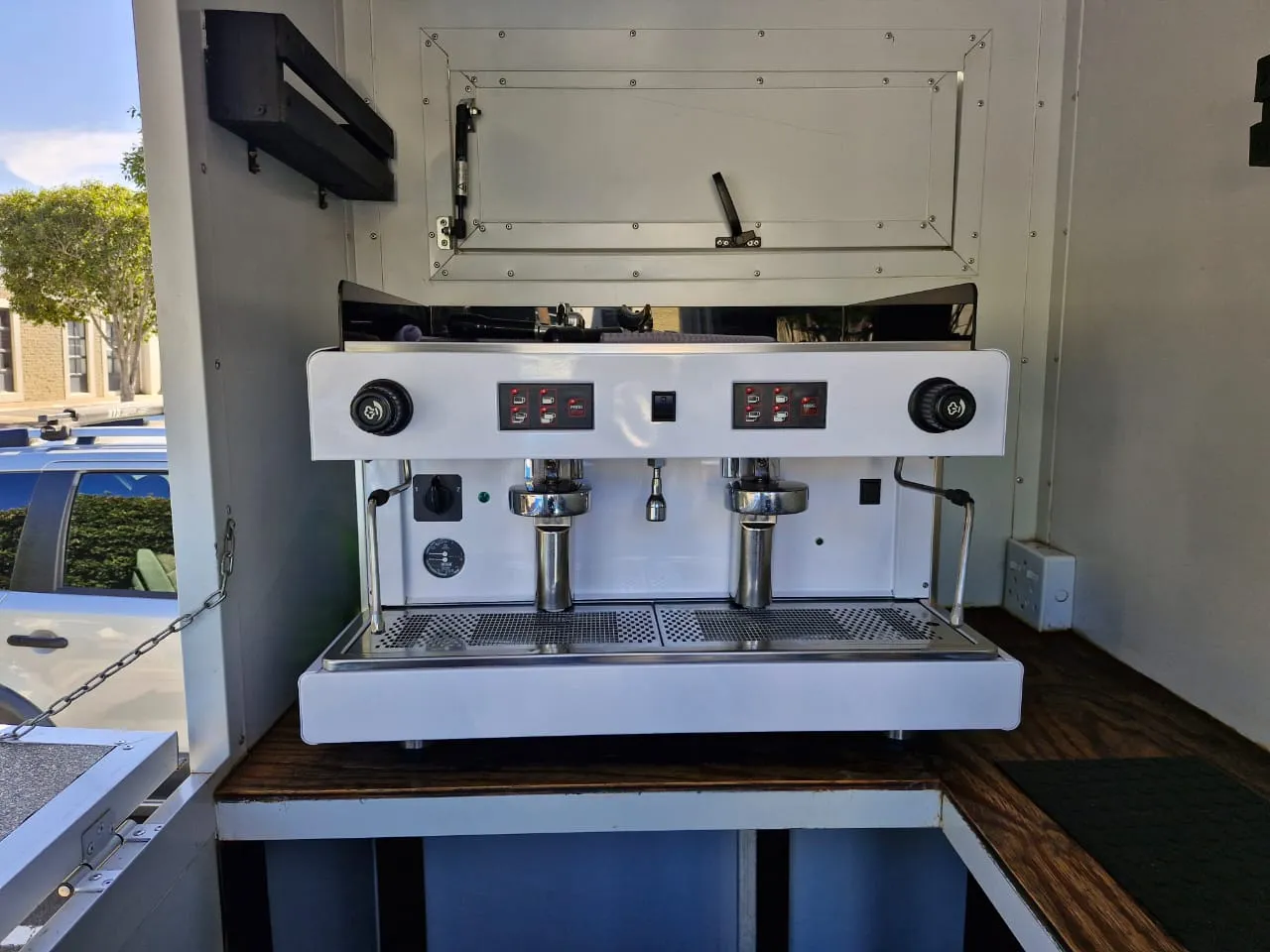
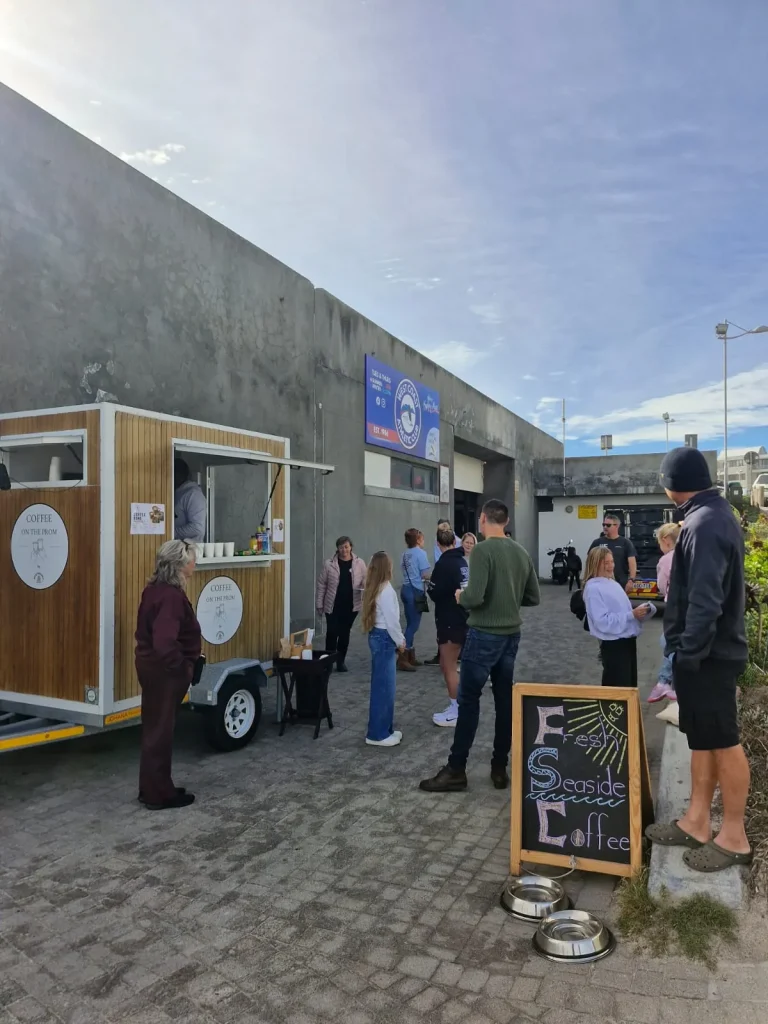
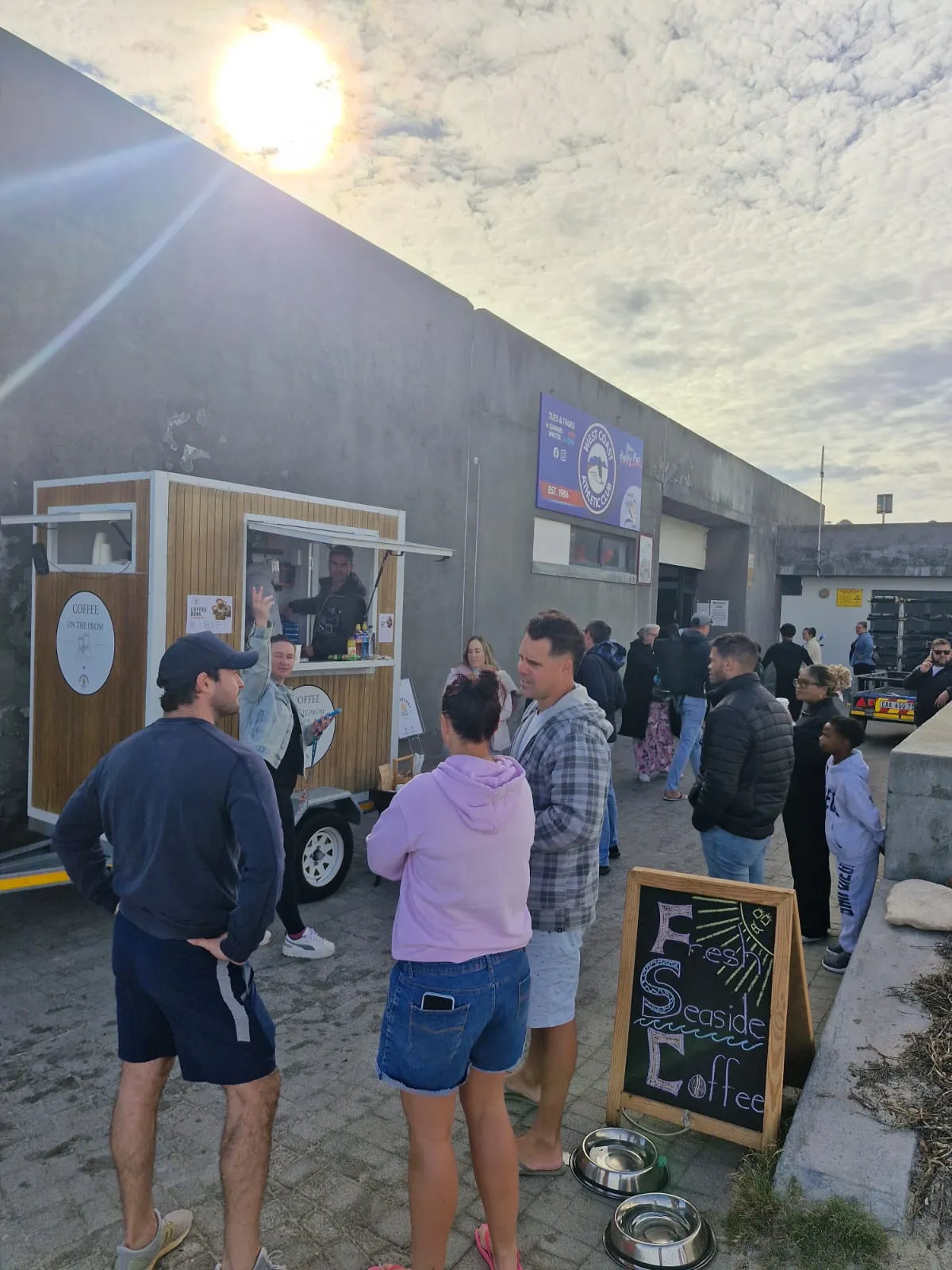
Coffee is about the friendliest possible case. It generally lands in the lower-risk Category 1, so the food-safety burden is real but manageable. You’ll still need the business licence and COA, and if you’re running an LP gas boiler you’ll need the gas compliance certificate, but you’re not dealing with the raw-meat, made-to-order complexity of a full kitchen on wheels. The main things to nail early are a properly hygienic, well-designed setup (it has to pass the COA inspection), your water and waste plan, and confirming where you’re allowed to park before you commit to a pitch.
A sensible order to do all this
- Register the business (CIPC) and sort a roadworthy, licensed vehicle or trailer.
- Decide your where: public MBTAs, private property, events, or a mix. Check the City’s published MBTA list before buying anything, so you know real trading spots exist for your concept.
- Build or fit out your unit to pass a health inspection (this is easier to design in than to retrofit).
- Apply for the business licence + COA through City Health, pulling together your waste plan, fire certificate and gas/electrical compliance.
- Apply for the relevant Mobile Business Permit (public land) and/or secure landowner permission + zoning/consent use (private land).
- Sort public liability insurance and keep your permit displayed while trading.
Myths worth busting
- “You just need one licence.” Nope. It’s a small stack: business licence, COA, fire, gas/electrical, vehicle, insurance, plus a trading permission for the location.
- “You can park and sell anywhere there’s a gap.” On public land it must be a designated MBTA. Random spots aren’t allowed.
- “Private property means no red tape.” You skip the MBTA permit, but zoning/consent use and (for food) health licensing still apply.
- “Food trucks are basically banned in Cape Town.” The opposite direction, actually. The 2025 policy exists to expand and formalise where mobile businesses can trade.
Frequently asked questions
Do I need a licence to sell coffee from a trailer in Cape Town?
Yes. Coffee counts as food handling, so you need a business licence and a Certificate of Acceptability from the City’s Health department, plus a trading permission for wherever you park (a Mobile Business Permit for public MBTAs, or landowner permission and correct zoning on private land).
Can I run a food truck from a public parking bay?
Only if that bay is a City-designated Mobile Business Trading Area and you hold a Mobile Business Permit for that spot. You’ll know if it’s a spot if its got a (sometimes faint) yellow painted alpha numeric spot number on it, like “T32”. Trading from a public spot that isn’t a designated MBTA is not allowed.
What’s the difference between a food truck and an informal trader?
A mobile business is a CIPC-registered business trading from a road-licensed, self-contained vehicle, permitted through the Mobile Business Policy. An informal trader operates from a fixed, marked bay under the informal trading system. Different categories, different permits.
How long does a Mobile Business Permit last?
Up to three years, subject to you following the rules of the policy and the specific trading area.
Do the rules differ for non-food mobile businesses?
Yes, they’re lighter. Non-food operators (think flowers, books, grooming) don’t need the food business licence or COA, though they still need a Mobile Business Permit to trade at a public MBTA.
The honest summary
Starting a food truck or coffee trailer in Cape Town is very doable, and the ground has actually gotten friendlier since 2025. The trick is to separate the two questions early (what you sell, and where you trade), get your health licensing right because it follows you everywhere, and confirm your trading spot is legal before you invest. Do it in that order and the “impossible admin” turns into a checklist.
And if all this has you dreaming about your own coffee setup, that’s kind of our world. We roast small-batch in Blouberg and run Apothecary’s events side too, so if you want to talk beans for your trailer, wholesale, or just see how we do it, come browse our coffees, take a look at what we’re about on the about page, or say hi on Instagram.
Fuelling your own coffee venture?
Small-batch beans, roasted to order in Blouberg and shipped to your door.
Official sources (check these for the latest)
- City of Cape Town – Mobile Business Policy (Policy 70064, approved 28 May 2025)
- City of Cape Town – Apply for an informal trading permit
- City of Cape Town – Informal Trading FAQs
- City of Cape Town – Municipal Planning By-law, 2015 (zoning & consent use)
- City Health / Environmental Health – for the business licence and Certificate of Acceptability (contactable via the City’s call centre).
Rules and fees change; the Mobile Business Policy is new and the list of trading areas is still growing. Always confirm current requirements with the City of Cape Town before committing money or signing a lease.