
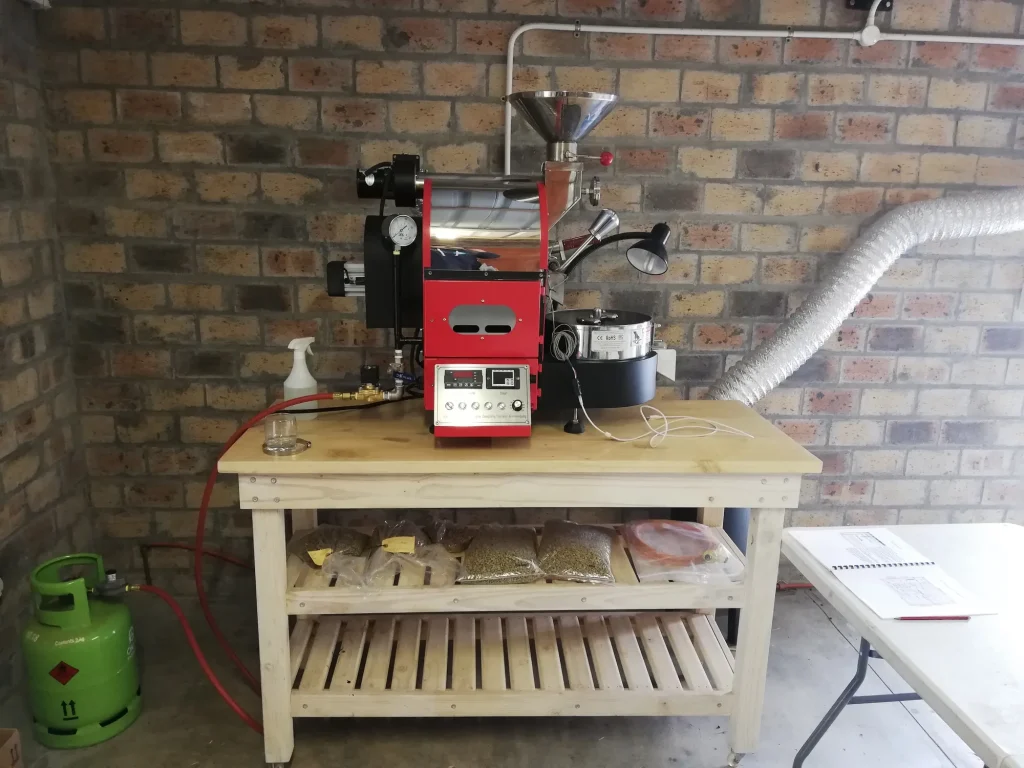
A few of you guys asked me in the past to create a post/video about the actual roasting process. To appease the masses, I created this YouTube video a few weeks ago. So this blog post you’re reading is a bit of a textual version of that as well as a follow up post in one. So here goes!
The first time I properly scorched a batch, I was standing over our little red Mill City roaster (which I deeply miss, by the way) with the extractor fan roaring, convinced I could squeeze another thirty seconds of flavour out of it. I could not. The beans came out oily and flat and smelling of a braai that had gone on too long after one too many beers (I have a friend, Dom, who is always guilty of this, but still probably doesn’t realise), and I had turned perfectly good green coffee into something I couldn’t sell. A whole kilo, gone. That, unfortunately, is an important part of roasting: its about paying attention and occasionally getting humbled.
People ask what actually happens between the green beans and the bag on their kitchen counter, and it’s actually paradoxically both an extremely simple, yet rather difficult thing to explain properly. That’s because the phrase “it’s part science, part art” is so true when it comes to coffee roasting, which is why I usually lead with something along those lines when trying to explain it. The process is also very different to something like baking (another analogy I like to lead with). So anyway, this is roughly what’s going on when we roast your coffee, coming from someone who does it a few mornings a week and still respects how easily it can go wrong.
Green beans are basically raw ingredients
Raw coffee is green. Actual pale green, dense and a bit grassy, and if you tried to brew it you’d get something closer to vegetable water than coffee. They are literally as hard as stones, so don’t try to chew on them unless you’re dumb/curious, like I am (the first 10 times Ive done it I will happily refer to as moments of curiosity but I have no excuse for all the other times). All the flavour you know, the chocolate, the fruit, the caramel sweetness, is locked up inside as potential. Roasting is how you unlock it, using nothing more exotic than heat, time, and airflow (ok, and some would also argue for adjusting the speed of the rotating drum that shakes up the beans but I personally don’t).
Once the beans are in the hot drum, after pre-heating it for 45 minutes, two big things start happening. The sugars begin to caramelise, and a set of reactions between sugars and amino acids kicks off, the Maillard reaction, which is the same browning that makes toast and a seared steak taste the way they do. Cool, so now you learnt a new word that you can drop into day to day speech; example: “You look like a Maillard Reaction today, what’s wrong? Also, I’m hungry, may I please have some toast?”
But yeah, that’s where a huge amount of coffee’s aroma and colour comes from – it’s the initial drying of the moisture in the beans, followed by the Maillard reaction. So in a real sense I’m not adding any flavour, I’m coaxing out what the farmer and the variety and the processing already put there. My job is mostly to not mess it up. I am literally trying to bring out the most from the bean/origin/processing method’s potential. It’s basically the same aim at every stage in the process of farming, processing, roasting, and brewing of coffee.
First crack! Who put popcorn into my roaster?
A few minutes in (somewhere between 7-8 on my machine), if you’re listening, the beans start to pop. It sounds a lot like popcorn, and it’s called first crack. That’s steam and pressure building inside each bean until it physically cracks open and expands. First crack is the big landmark of the roast, because roughly from there on you’re in drinkable territory, and every second after it is you steering the flavour.
Pull the beans soon after first crack and you get a lighter roast: brighter, more acidic in flavour, more of those delicate fruity and floral notes that people either love or find “too tea-like.” Let them develop longer and go darker and you trade some of that brightness for body, chocolate, roasty depth, and eventually, if you push it like I did that day, bitterness and ash. Neither is wrong, they’re just different points on the same curve. FYI: there’s a second crack later on too, quieter and sharper, that tells you you’re heading into proper dark-roast territory… But I dare not go there.
The bit I’ve become a little obsessed with is those last moments after first crack, the “development time” as the nerds (hi, I’m the nerds) call it. Drop the beans a few seconds too early and they can taste green and grassy, a bit like a raw peanut. Give them a touch longer and the sugars round out and the whole thing comes together. We’re talking seconds here, not minutes, which is why I stand over the machine like a meerkat instead of looking at my phone.
Honestly, a lot of roasting comes down to attention to detail. The smell shifting from grassy to bready to sweet to almost jammy, the colour, the sound, the timing. Fancy setups log temperature curves on a laptop (and I do watch the numbers), but plenty of it is still nose and ears and a notebook. If you want to see someone explain the science far better than I can over a counter, James Hoffmann has gone deep on all of it. The Mill City guys also have fantastic learning material on YouTube, which is 90% of what I learnt from myself.
Why we roast small, and why we roast often
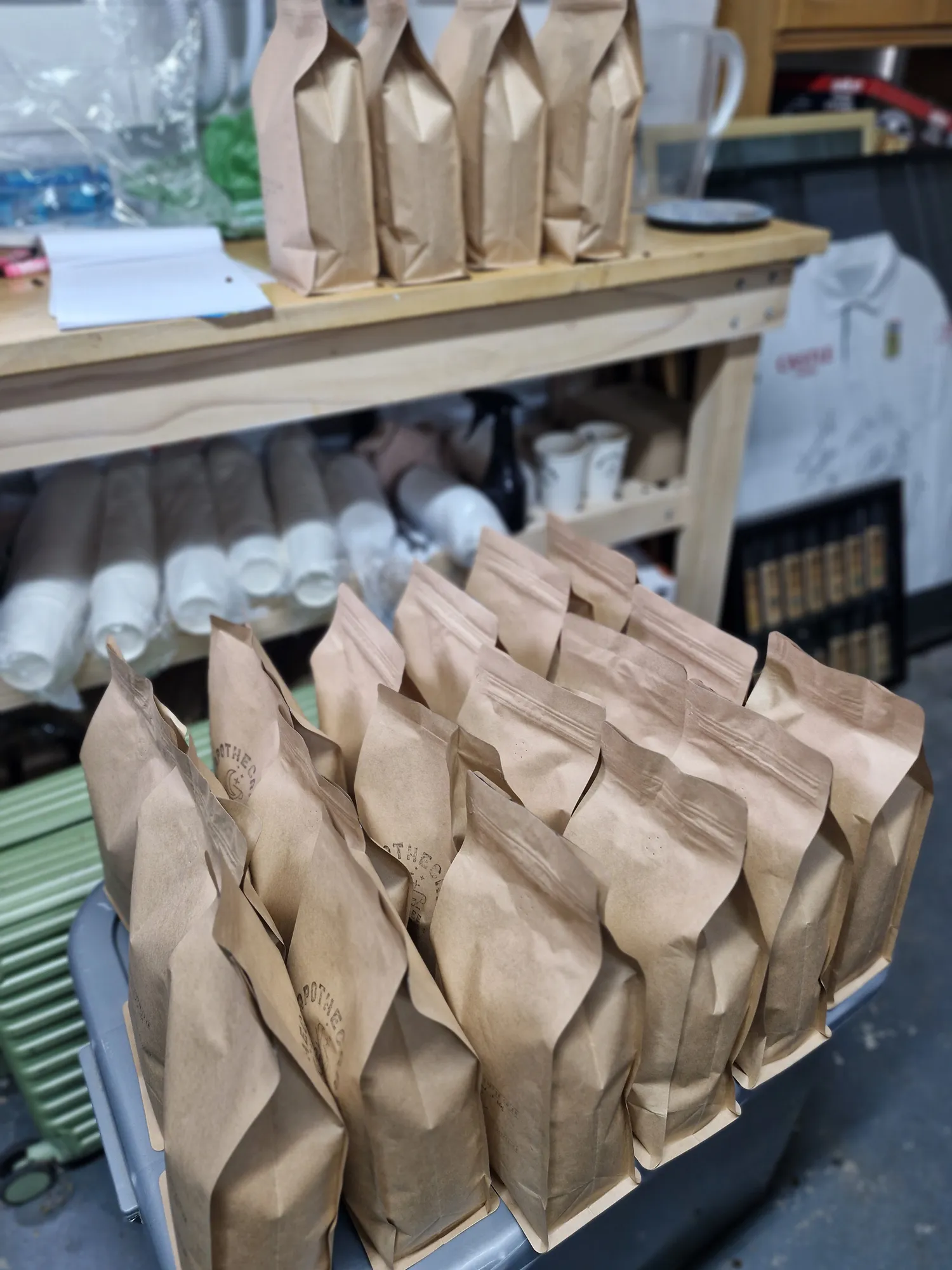
“Small Batch. Big Soul.” isn’t only a nice line to put on our home page. Roasting small, a kilo or a few at a time, means I can pay attention to each batch and adjust as I go, and it means nothing sits around for months waiting to be sold. It does cost me a great deal more time though, if I’m honest. We roast to order and get it to you quickly, because a bag that’s been on a shelf since who-knows-when has already given up a lot of what made it special (side note/tip: never buy a bag of beans that only has a best before date on it and no actual “roasted on” date).
It’s a slower, fiddlier way to run a coffee business than roasting huge drums once a month and warehousing it, and that’s sort of the point. We’re a small Blouberg outfit, not a factory, and roasting little and often is how a handful of us keep the quality where we want it. It’s also helpful for Quality Control, so that we can toss out a batch that isn’t within our “90% of the mark” range. I’ll probably do a more business focused post on this at a future date by the way, because I’m sure you’re wondering why on Earth I’d accept 90% of perfect as “good enough”… Another post for another time.
Fresh off the roaster isn’t quite ready
This part is super important for those new to coffee: coffee straight out of the roaster is a bit too fresh to be at its best. It spends the next few days “resting,” puffing out CO2 that built up during the roast. Brew it the same day and it can taste a little sharp and unsettled, or “funky”. Give it a few days to a week and it opens up and gets sweet and balanced. So when a bag has a roast date on it (ours do), that date isn’t a warning, it’s the start of the good window. That’s especially true for espresso – it really needs a good week to be at its peak – any sooner and you’re going to taste (and regret) it.
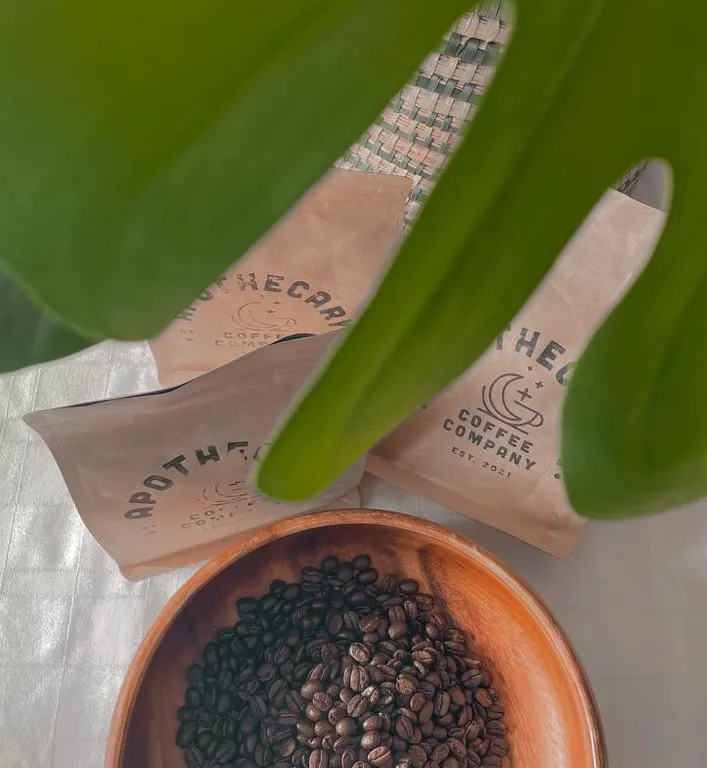
Which is the other half of the story, really. Roasting well only gets you so far if the coffee then sits in a warm cupboard for two months, so how you store it and brew it matters just as much. If you want to keep going, I’ve written about how to actually store your beans, about reading those tasting notes without the nonsense, and about getting a good pour-over at home. The roast is just the first step in a chain, and you’re holding the last one.
Next time you open a bag, have a proper sniff before you grind. That smell is a whole morning of someone standing over a hot drum, paying attention, trying not to get humbled. Have a look through our single origins and blends if you want to taste what a fresh roast is meant to be, and come say hi on Instagram.
Ready to taste the difference?
Fresh roasted by Apothecary in Blouberg, shipped to your door.
Browse our coffees →