
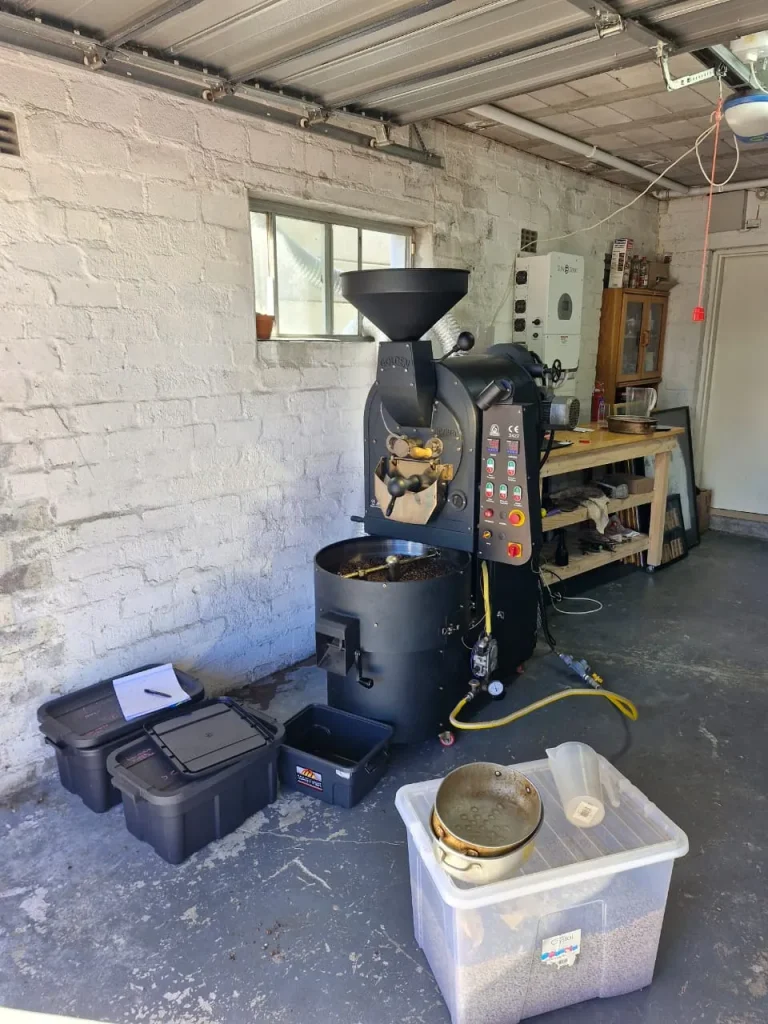
Green coffee doesn’t smell like coffee at all. It’s pale, dense, and smells vaguely of hay or wet grain, completely unremarkable, sitting in sacks in the corner of the roastery before I’ve touched it. Every time I open a new sack there’s a brief moment of “are you sure this turns into coffee.” Then it goes into the drum and something close to alchemy happens.
I upgraded from a tiny 1kg sample roaster to a proper 5kg drum last year, still parked in Blouberg, still slightly too loud for the room I’ve got it in, and I still find the actual chemistry of roasting kind of magic, even doing it most days now. Maybe especially doing it most days now.
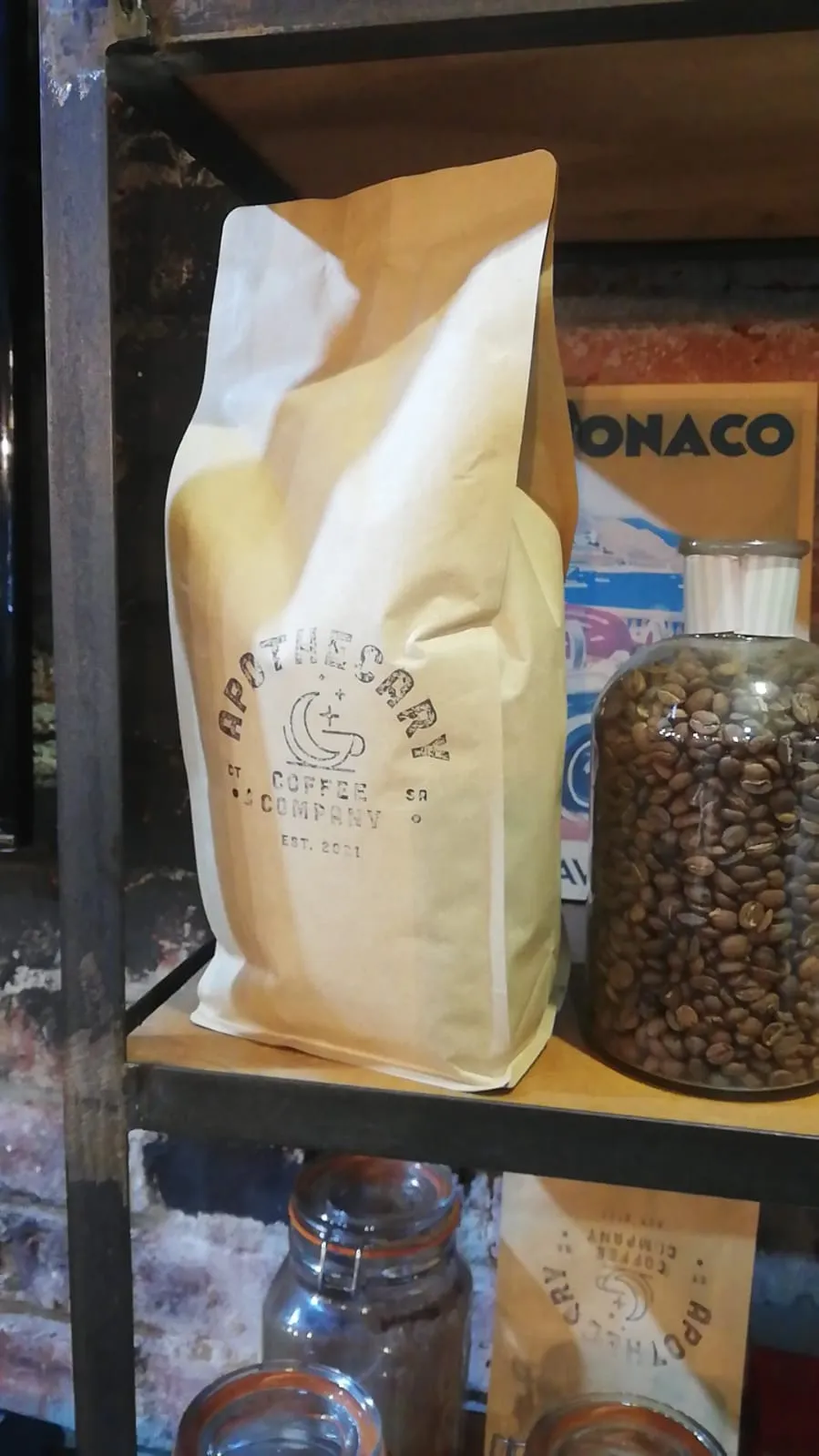
The bit where chemistry does the work
A green bean is loaded with acids, sugars, proteins and chlorogenic acids sitting there dormant, more or less flavourless. Apply heat and they start reacting with each other, mostly two processes doing the heavy lifting: the Maillard reaction (the same thing that browns a steak or a crust of bread) and caramelisation, sugars breaking down under heat. Between them they generate literally thousands of aroma compounds. Skip this step and you’d basically be drinking grassy herbal tea, which, no thank you.
What still gets me is how touchy the whole thing is. The very same green bean, from the very same sack, can come out tasting like blackcurrant and honey or like a burnt cracker, depending on choices I make over the space of about a minute. A few degrees, a few seconds either side, and you’ve changed which of those thousands of compounds show up and which stay buried. If you fancy the proper science-y rabbit hole, the Maillard reaction alone has kept food chemists busy for over a century.
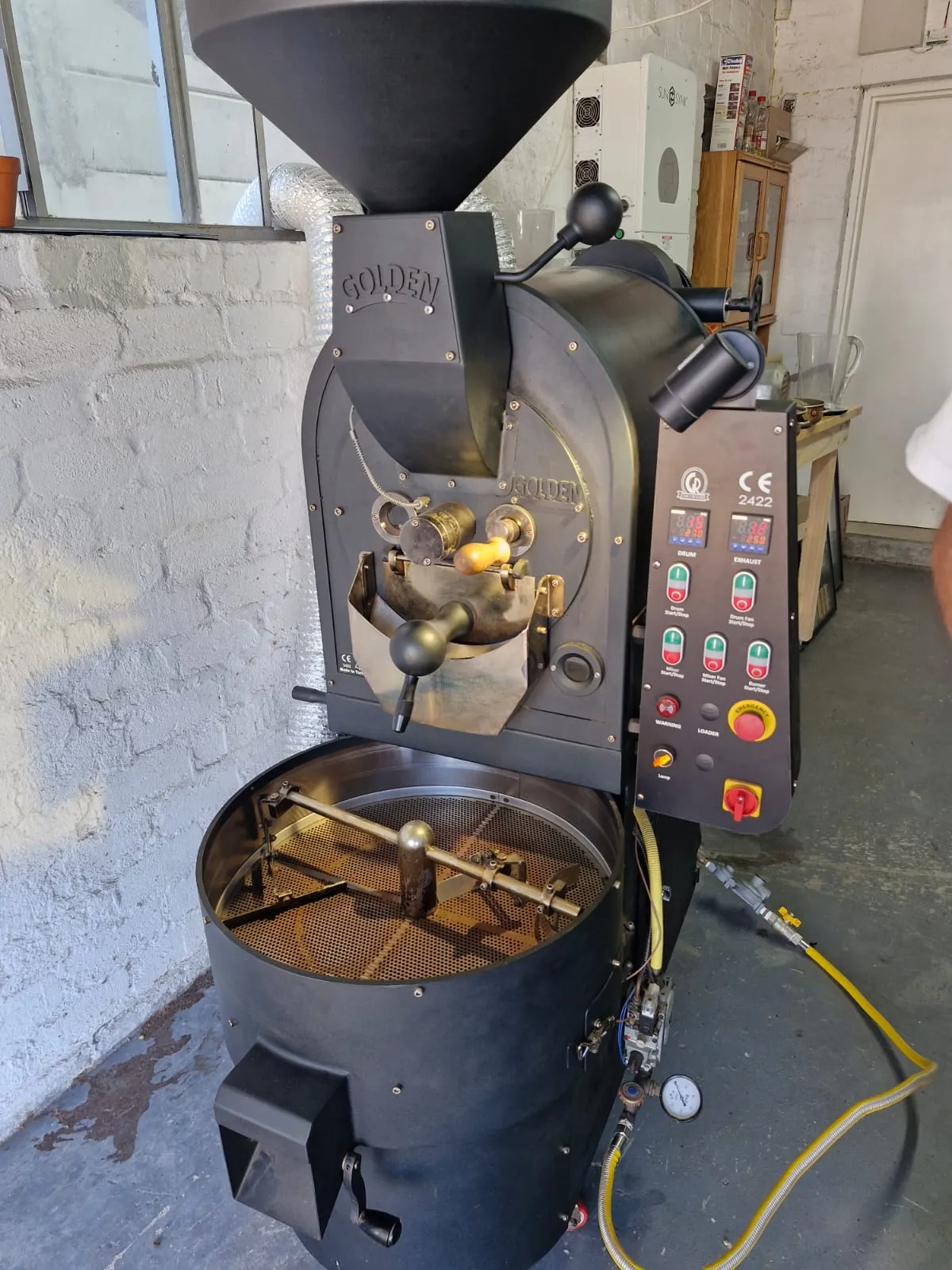
What I’m actually doing up there for twelve minutes
Roasting isn’t just “apply heat and wait.” I’m managing a temperature curve in real time, and the small decisions along the way change the cup completely.
- Drying phase: beans lose moisture, still yellow-green, smell like hay or fresh bread.
- Maillard phase: colour shifts to golden, then light brown, the good roasty smell starts showing up.
- First crack: an actual audible crack as the bean expands and releases CO2. Roughly where “light roast” starts. Drinkable here, bright, high acidity, a lot of the origin’s own character still intact.
- Development time: the stretch between first crack and, if I go that far, second crack, where I decide how far to push it. This single decision affects the cup more than almost anything else I do.
- Second crack, if I get there: darker, oilier, more bitter, proper espresso or French roast territory. I rarely go here.
For most of those twelve minutes I’m honestly half-listening. First crack has a sound like distant popcorn, or a knuckle cracking if the room is empty enough, and the second it starts the clock in my head gets very loud. Pull the beans too early and the cup is sharp and green; ride it a few seconds too long and the fruit you paid good money for starts collapsing into generic “roasty”. There’s no undo button on a batch, which is either terrifying or the best part of the job, depending on the morning.
Why I mostly stop early
A lighter roast keeps more of the bean’s own personality, the fruit, the florals, whatever the specific farm and altitude and processing gave it. Push it darker and you start replacing that with roasty, chocolatey, bitter notes from the roasting itself, which increasingly all taste the same no matter what bean you started with. Neither approach is wrong, but roasting a really interesting natural Ethiopian dark feels a bit like ordering a well-marbled steak well done. Technically allowed. Questionable choice. I roast on the lighter side of medium across most of what I sell, light enough that the origin still gets to talk, developed enough that it works across a pour-over, a plunger or an espresso machine.
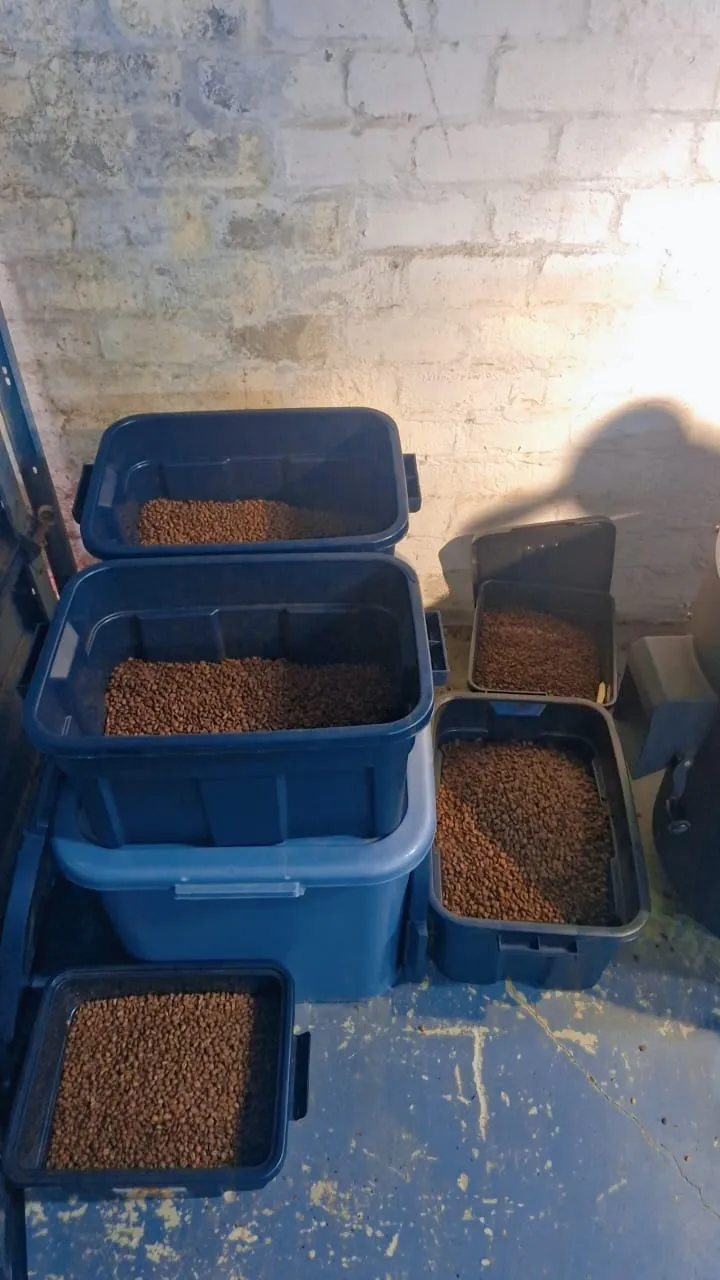
If you want the more chemistry-minded version of this, the National Coffee Association has a good breakdown of the roasting process. And if you want the practical side, what roast level and freshness actually do to your coffee once it’s home, I wrote about that separately in fresh coffee, the one thing most people get wrong.
Here’s why any of this should matter to you and not just to the nerd at the roaster: the roast is where a lot of what you taste at home is decided, before the water ever hits the grounds. If you’ve ever wondered why one bag tastes like a fruit bowl and another like burnt toast, a big part of the answer is up there in the drum. Once you’ve got a bag home, the next levers are yours: how you actually taste it and how fresh it is. And if you want to go one step further back down the chain, before the roast, the farm’s processing method shapes the raw material I’m working with in the first place. It’s turtles all the way down, but delicious ones.
Taste this week’s roast for yourself
Small batches, developed lighter to let the origin speak.
Shop our coffee blends →
Basic introduction but simple is good sometimes. Tks