
If you’ve just bought, or are thinking of buying, a commercial espresso machine here in South Africa, you’ll notice pretty fast that a lot of the actually-useful stuff isn’t written down anywhere. The manual tells you how to make a coffee. It does not tell you how to keep pulling shots through Stage 6 load-shedding, how to move the thing without soaking your bakkie, or why your shots suddenly changed the day you switched beans. We run a couple of Wega commercial espresso machines at Apothecary, one of them out of a coffee trailer, and this is the sort of thing I wish someone had told me at the start. None of it is gospel, it’s just what a small Blouberg roastery has learned by doing it.
Running it when the power’s out: gas conversion, inverters and load-shedding
This is the big South African one, so let’s start here. A standard commercial machine like a Wega Pegaso heats its boiler with an electric element, and that element pulls a lot of power. When the grid goes down, so does your coffee, which is a problem if half your trade happens exactly when everyone’s office has gone dark and they’re wandering out looking for a flat white.
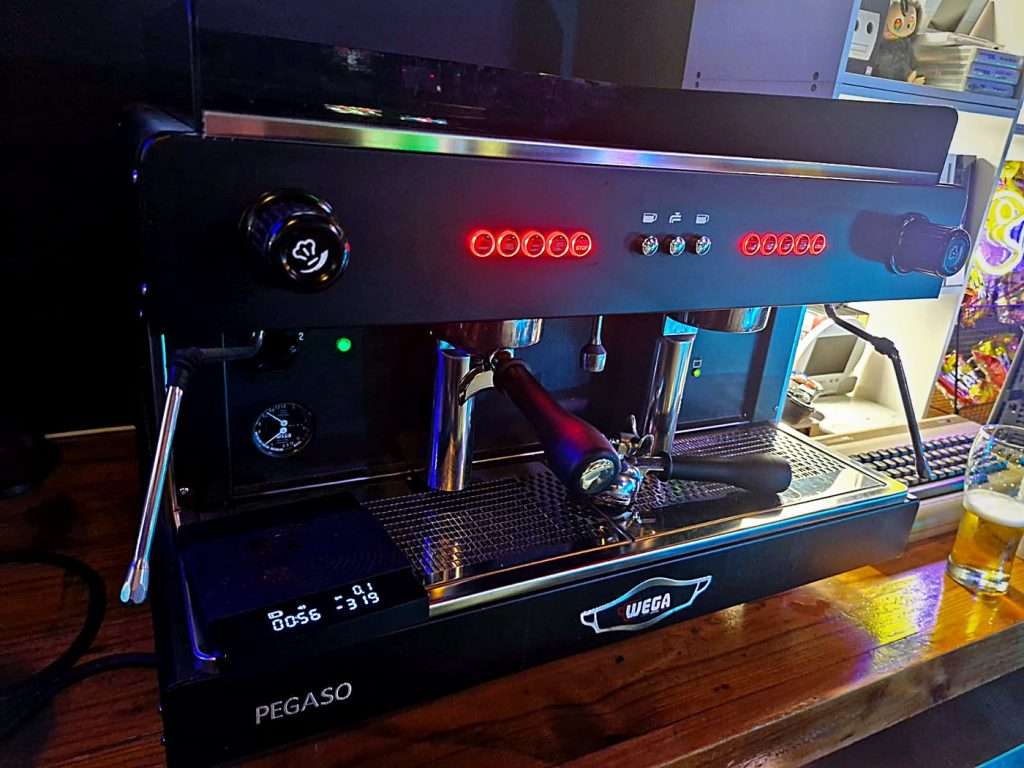
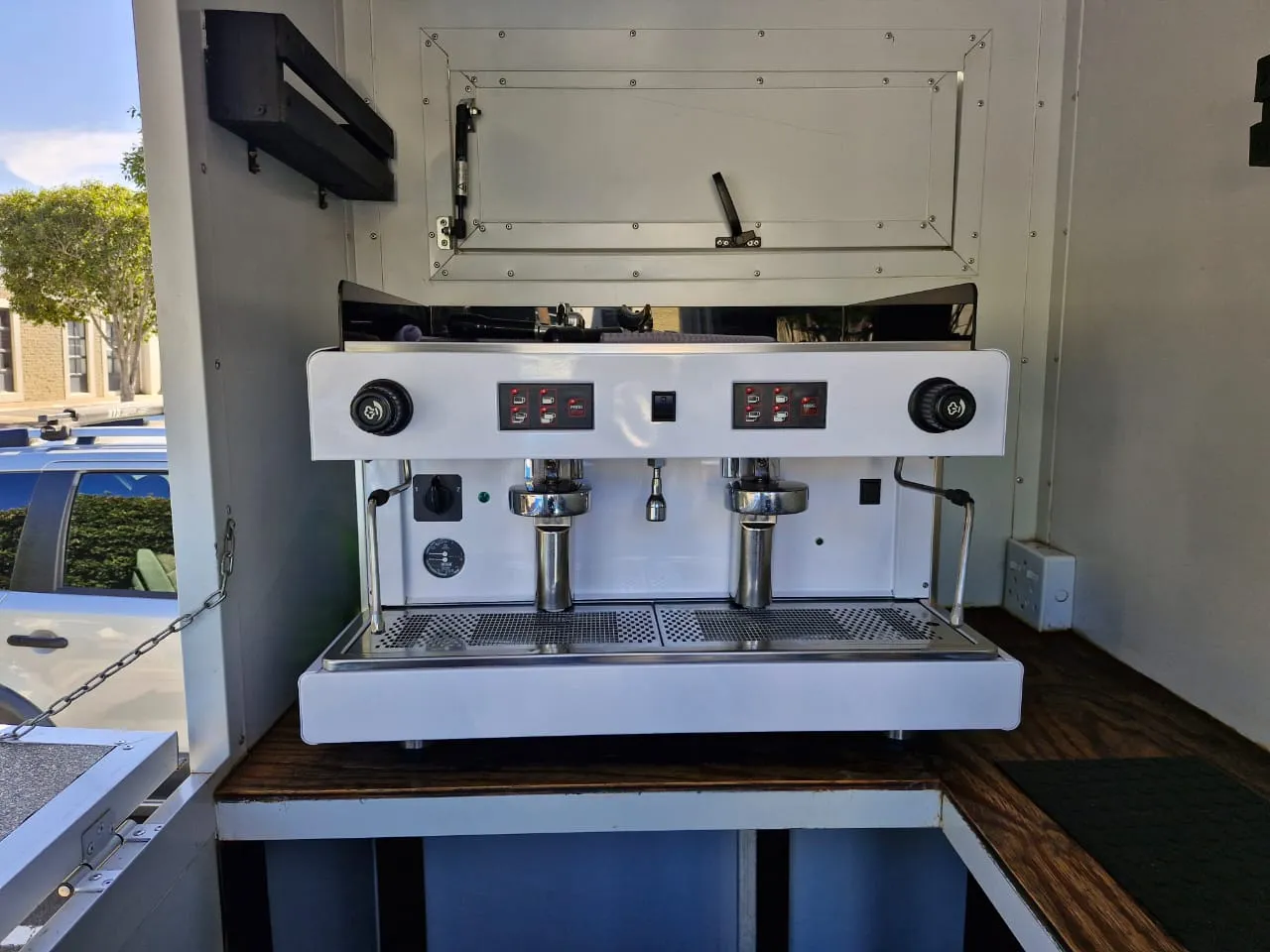
There are two things worth understanding here, because people mix them up. The first is heat. You can have a machine gas converted, which means a technician fits an LPG gas burner under the boiler so it heats on gas instead of relying on that big electric element. That’s how our white trailer machine runs: it’s gas converted, so it can get up to temperature and hold pressure with no wall socket in sight. (The black Pegaso we’ve currently got for sale is a standard electric one, by the way, not gas converted. Perfect for a fixed cafe with power or a backup supply, and you can always have it converted later if you go mobile.)
The second thing, and the bit people forget, is that even a gas-converted machine still needs a little electricity. The pump, the solenoids and the electronics all run off power, they just don’t need the huge draw of the heating element anymore. So gas gets you the heat, but you still pair it with a small power source for the electrics: a modest pure sine wave inverter and battery, or a small generator, sized to the pump rather than to a whole heating element. That combination, gas for heat plus a bit of stored or generated power for the pump, is what actually keeps you trading off-grid. It’s a much smaller and cheaper power setup than trying to run the entire machine, element and all, off batteries.
On cost, I’m not going to quote you a number, because it really depends on the machine, the technician and what power setup you pair it with, and I’d rather not make one up. Gas conversions in Cape Town are done by a few places (Euro Caffe is one worth asking, they do this kind of work), and it’s the sort of job you want someone who knows LPG and espresso boilers to do properly, not a weekend DIY. If you want to talk it through, or you’re eyeing our machine and wondering what converting it would involve, just drop us a message and we’ll happily share what we know and what we run.
Draining it before you move it
Commercial machines hold a surprising amount of water in the boiler, and water is heavy and it sloshes. If you’re transporting a machine, moving a trailer, or shipping one to a buyer, you want that water out first. Move it full and you’re carrying dead weight around, it can slop out and get into places it shouldn’t, and you’re putting strain on everything.
The trick most people miss on a Wega: switch it off and let it cool and depressurise first, then pull out the drip tray, and underneath you’ll find a little black tap. Turn that tap and it drains the water out. That’s it. It’s almost annoyingly simple once you know where to look, but I’ve watched people wrestle a full machine into a car with no idea that little valve was right there the whole time. Cool, drip tray out, open the tap, let it drain, then move it.
Your Pegaso probably doses by volume, not time
This one catches out a lot of new owners, and it’s worth getting your head around because it changes how you dial in. On the electronic Wega Pegaso (the EVD), the dose buttons work by volume of water, not by time. There’s a little flowmeter counting how much water has gone through, and each programmed button pushes a set volume and then stops. It is not counting seconds.
Why does that matter? Because on a timed machine you think in seconds, but here the machine will faithfully push the same volume of water every time, regardless of what your coffee is doing. Change to a denser bean or a finer grind and the shot might take longer to pass that same volume, so your timing and yield behaviour shift even though you changed nothing on the machine. The upside is real consistency: once it’s dialled, every barista gets the same volume at the touch of a button. The catch is you have to steer flavour with the grind, and you re-programme a button by holding the continuous/manual button, letting it run to the yield you want in the cup, and saving, so it memorises that volume. FYI, if a button ever starts pouring weirdly long or short for no reason, a sticky or scaled-up flowmeter is a prime suspect, which is another good reason to keep your machine descaled given how hard a lot of our water is.
Thinking of buying a used commercial machine? What to check

Buying second-hand is honestly how a lot of small SA coffee businesses get started, and a well-cared-for commercial machine will run for years. But you’re buying a pressure vessel that’s had a previous life, so it pays to look properly. A few things I’d check or ask about:
- Boiler and element: any history of leaks, and has the element been replaced or is it original? Boilers scale up over time, especially with hard water.
- Group seals and solenoids: tired group gaskets and sticky solenoid valves are common and usually cheap-ish to sort, but you want to know going in.
- Limescale: ask when it was last descaled and serviced. Our water can be brutal on a machine that’s been neglected.
- Sizing: a 2-group is the workhorse for a cafe or busy trailer; a 1-group can be plenty for lower volumes and sips less power.
- Spares and service: stick to brands a local tech can actually get parts for. Wega, being common here, is a safe bet on that front.
We tend to only pass on gear we’d be happy to use ourselves. Right now that includes the black Wega Pegaso 2-group, along with a few other bits of used equipment like grinders. If you’re weighing something up and want an honest answer about whether it suits what you’re planning, ask us. I’d rather talk you out of the wrong machine than sell you one you’ll resent.
A machine is only as good as the beans in it
All of this fuss over machines, and the fastest way to better coffee is usually just fresher, better beans, ground right. A spotless Wega will still make a sad cup out of stale supermarket beans that were roasted who-knows-when. So whether you’re setting up a cafe, a trailer, or just a serious home corner, sort your coffee supply out with the same care you gave the hardware.
That’s the side we love most. We roast to order in Blouberg, small batches, and if you’re going through beans regularly for a business or just a proper daily habit, it’s worth setting up a standing order so you’re never scratching around for coffee mid-week (chat to us if you’d like that sorted on a repeat basis). Have a look through our blends and single origins to find something you actually love pulling, and if you’re planning something bigger, from a trailer to an event, our trailer hire and events page is there too.
Starting a coffee thing in the Western Cape is equal parts wonderful and humbling, and the small operational details are usually what trip people up, not the big romantic stuff. If there’s a specific one you’re stuck on, come ask us or say hi on Instagram. We’re a small outfit and we’re always happy to help another one get going.