
Full disclosure before anything else: we sell a few second-hand machines and grinders on this site now, so yes, I’ve got a bit of skin in this game. But most of what follows applies whether you buy from us, from a café in town that’s shutting its doors, or from someone on Facebook Marketplace in Durbanville who promises it “was only really used on weekends”.
Buying used is how a lot of small coffee setups in Cape Town get going. It’s how we got going too (our first proper grinder was a secondhand Wega that lived on an office floor next to a stack of chairs, very glamorous). A commercial espresso machine is a lot of money new, and one that’s been looked after can keep going for years and years after its first owner is done with it. The catch is that you’re buying something with a previous life, and a machine is basically a hot, pressurised box of water, so a bit of looking before you pay goes a long way.
So this is my list, more or less what I’d check myself before buying anything.
The short version, if you’re in a hurry
If you’re buying a second-hand espresso machine in Cape Town, see it running before you pay (pull a shot on every group and steam some milk), ask when it was last serviced and descaled, check the rating plate says 220–240V, make sure a local tech can actually get parts for it, and budget for a service straight after you buy it. For a grinder, ask roughly how many shots have gone through it and whether the burrs have ever been replaced, and listen to the motor. The rest of this post is me going on about those in a lot more detail.
Where second-hand coffee gear in Cape Town comes from
It’s worth knowing who you’re buying from, because it changes what you should be asking. Roughly, used coffee equipment around here comes from four places.
- Private sellers on Gumtree or Marketplace. Usually the cheapest, and the riskiest, because you’re mostly buying on trust and a nice photo. Some of these are gems. Some have been sitting in a garage in Bellville since 2019 with water still in the boiler.
- Cafés closing or upgrading. Cape Town has a lot of small coffee spots opening and closing all the time, so there’s a steady supply of commercial kit. It’s often been worked hard, but a café that was any good will have serviced it now and then. Ask why it’s being sold. “We’re upgrading” and “we’re closing” are both fine answers. If they get vague about it, ask a few more questions.
- Equipment dealers and technicians who refurbish machines. You’ll pay more, but a proper refurb usually means it’s been opened up, descaled, and given new gaskets and seals, and some come with a short warranty. If you don’t know what you’re looking at, this is the safer route.
- Roasters and coffee businesses (like us) selling gear they’ve actually used themselves. The upside is you can ask how it behaved day to day. The obvious downside is that we’d say nice things about it, so push for specifics, like how many shots, what’s been replaced, and what’s wrong with it.

Espresso machines: what I’d look at
Turn it on from cold, and watch it heat up. If the seller has it “already warmed up for you” when you arrive, that’s kind, but ask to see it come up from cold another time, or at least ask how long it takes. A big two-group commercial machine takes a while to heat properly (think closer to half an hour than five minutes), so don’t panic if it’s slow. What you’re watching for is that it gets there and then holds. On most heat-exchanger machines the boiler gauge should settle somewhere around 1 to 1.5 bar once it’s hot, and during a shot the pump gauge should sit around 9 bar. If a needle is wandering all over the place, or never gets there, it’s worth asking the seller a few more questions about it.
Pull a shot on every group, not just the one they show you. Two-groups sometimes have one group that’s perfect and another that’s been limping for a year. Take your own beans if you can (and a friend who knows what a decent espresso tastes like, if you’re not sure yet). Then steam some milk. The steam should come out dry and strong rather than spluttery and wet. Try the hot water tap too while you’re at it.
Lock a portafilter in and see where the handle ends up. This one’s a nice little tell. If the handle swings way past the middle to seal, the group gasket is probably tired and hard. It’s a cheap part to replace and not a reason to walk away, but it tells you a bit about how much care the machine’s been getting. While you’re there, have a look at the shower screen. A bit of coffee residue is normal. If it’s black and caked, it probably never got backflushed.
Look for scale. This is the one that slowly kills machines. Scale is the chalky white build-up minerals leave behind when water gets heated, and it clogs pipes, valves, flowmeters and the element itself. Check the steam tip, around the group, and anywhere you can see inside. How bad it gets depends a lot on the water the machine lived on and whether it ran through a filter, so ask. A machine that’s come down from somewhere with harder water, or that ran without a filter for years, is worth a closer look. (If you want to see what your own area’s tap water is doing, the City of Cape Town publishes its drinking water quality reports, hardness and all.)
Check for leaks. Look under the machine and around the base, and check whether the groups dribble when nobody’s using them. Some drips from the drip tray area are normal-ish. Water coming from somewhere near the boiler is not.
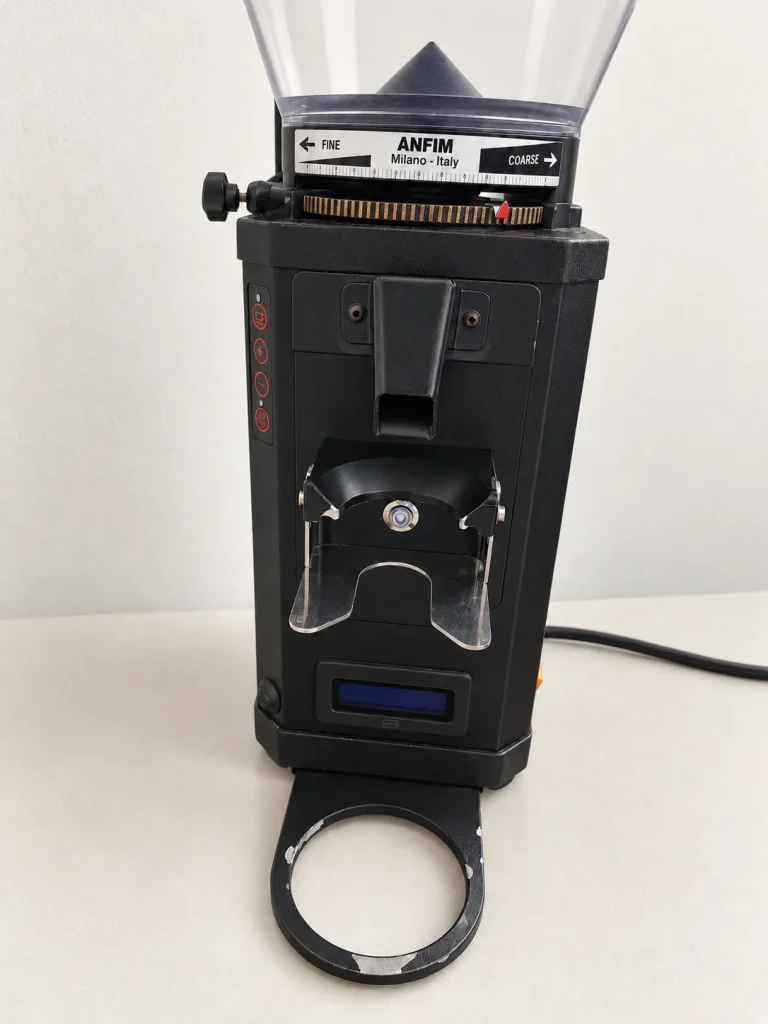
And ask boring questions. Roughly how many cups has it done? When was it last serviced, and by who? Was there a water filter? What’s been replaced? Why are you selling? A seller who knows the answers usually looked after the machine. For some context, the black Wega Pegaso we’ve got listed has done around 400 cups since new, which for a commercial machine is barely broken in, and the Anfim grinder next to it has done about 25,000 shots.
Power, plugs and load-shedding (the very South African part)
This is where people get caught out after the fact. A two-group commercial machine pulls close to 3 kW (our Wega is rated 2,900W to 3,700W depending on how it’s set up), which is a lot more than a kettle and a lot more than a normal wall socket shared with the toaster wants to deal with. It needs its own properly rated circuit. In South Africa that means a registered electrician, and any new circuit should come with an updated electrical Certificate of Compliance. Some of the bigger machines are also wired for three-phase power, which a lot of homes and some small shops simply don’t have, so check before you fall in love.
Also, read the rating plate (the little sticker or metal plate on the back or underneath). You want to see 220–240V and 50Hz. Every now and then a machine or grinder turns up that was imported from the US at 120V, and running a 3 kW machine through a step-up transformer is a bad idea (and probably a smell you’ll remember for a while).
Then there’s load-shedding, which we all hope is gone for good but I wouldn’t bet my trailer on it. If you want to keep trading when the power’s out, the usual route is having the machine gas converted so the boiler heats on LPG, plus a small inverter or generator for the pump and electronics. I went into all of that properly in my post on owning a Wega commercial espresso machine in South Africa, including the little drain tap you want to find before you try to move one.
Grinders: a shorter list, but it matters more
If you’ve read my grinder rant you know where I stand on this. A so-so machine with a great grinder will make better coffee than the other way round, nearly every time. So when you’re buying used, the grinder deserves at least as much of your attention, even though it’s the less exciting thing to look at.
Check the burrs. Burrs are the two toothed metal discs (or cones) that actually do the grinding, and they wear down slowly over thousands of shots. Worn burrs grind less evenly, make more dust, and your espresso gets harder to dial in and a bit muddier tasting without you really knowing why. Ask roughly how many shots or kilos have gone through it and whether the burrs have ever been replaced. The good news is that on a lot of commercial grinders a new set isn’t the end of the world (on the Anfim we’re selling, for example, a replacement set costs under R1,000), so worn burrs are a negotiation point rather than a dealbreaker.
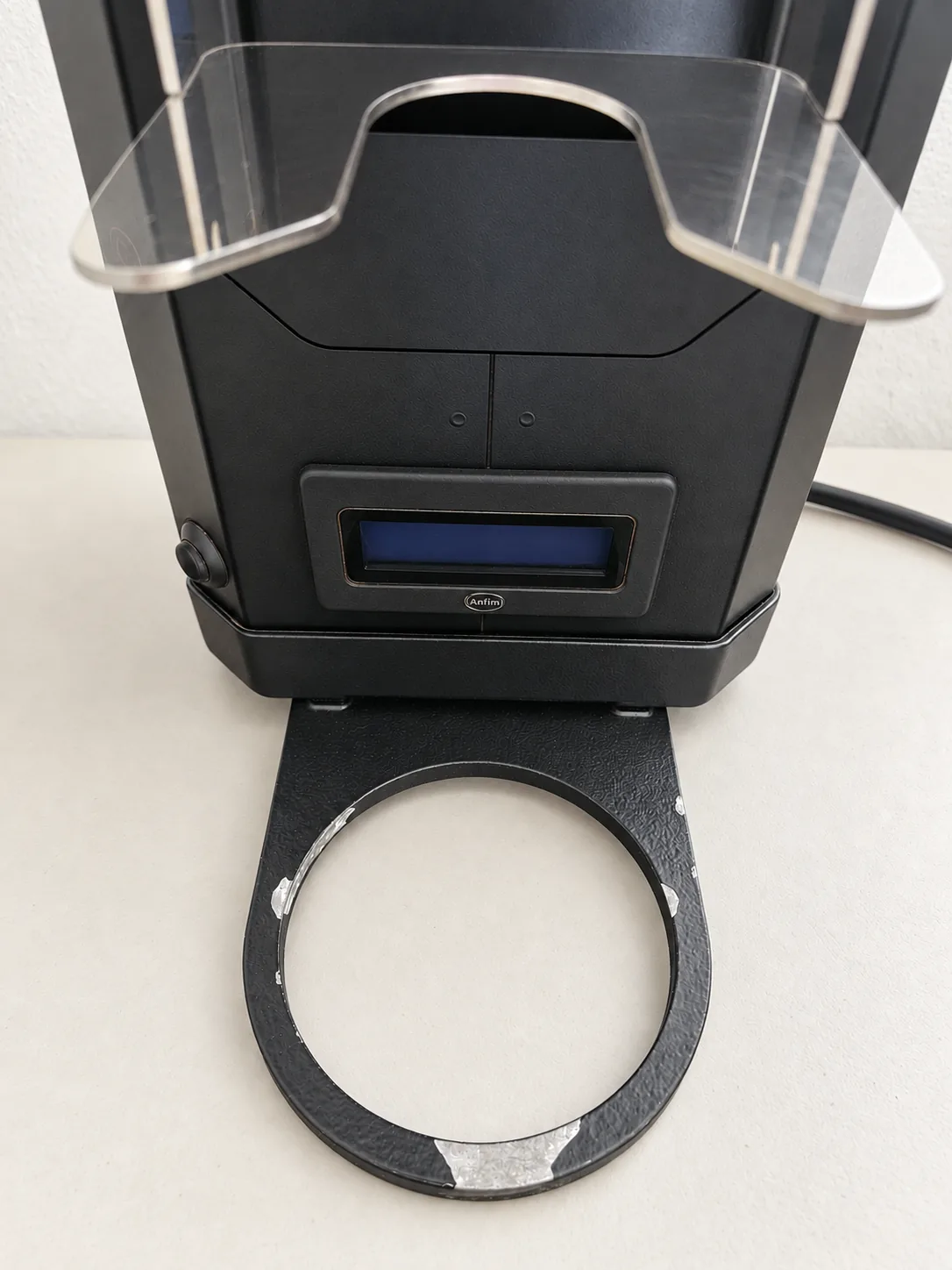
Listen to it. Run it empty for a second and then with beans. A healthy grinder has a steady, even sort of noise. Squealing, grinding metal-on-metal, or a motor that sounds like it’s struggling are all worth asking about.
Move the adjustment. The grind collar or dial should turn smoothly across the whole range. On grinders that were never cleaned, old coffee oils can gum it up to the point where it barely moves, and if you can peek inside the chamber, a thick layer of stale, rancid-smelling grounds tells you everything about the previous owner. (to be fair, maybe they were just busy)
Doser or on-demand? Older café grinders often have a doser, which is that chamber with a lever at the front where ground coffee sits and waits to be flicked into the portafilter. On-demand grinders grind straight into the basket, so the coffee’s fresh every time. There are still plenty of doser grinders around Cape Town and they’re usually cheaper, but for most people starting out (and definitely at home) I’d lean towards on-demand.
And match it to what you brew. This sounds obvious, but a lot of listings don’t mention it. A filter grinder like the standard Baratza Encore is lovely for pour-over, AeroPress and French press, and it can’t grind fine enough for proper espresso. A big commercial espresso grinder will happily do espresso all day, but it’s large, and it’s more than most kitchens need (not that that’s ever stopped anyone).

Parts and servicing in Cape Town
Before you buy anything unusual, phone a coffee machine technician in Cape Town and ask if they work on that brand and can get parts for it. Brands that are common here (Wega is one) are much easier to keep running than something rare someone brought back from overseas, and a cheap machine stops feeling very cheap if it’s sitting there for three months waiting on a part.
I’d also treat a service as part of the purchase price. New group gaskets, new shower screens, a descale and a once-over from someone who knows what they’re looking at. I’m not going to put a rand figure on it because it really does depend on the machine and on what they find, but budget for it upfront and it won’t feel like a nasty surprise later. If the machine’s just been properly refurbished, with proof, you can maybe skip this bit.
A quick checklist you can screenshot
- See it heat up and hold pressure (boiler around 1–1.5 bar, pump around 9 bar during a shot)
- Pull a shot on every group and steam some milk
- Lock in a portafilter and check where the handle ends up
- Look for scale, leaks and a caked shower screen
- Ask about cups or shots done, service history, water filter, and why it’s being sold
- Rating plate says 220–240V, 50Hz (and check if it needs three-phase)
- Plan a dedicated circuit and a registered electrician for anything around 3 kW
- Grinder: ask about burr wear, listen to the motor, turn the adjustment through its range
- Phone a local tech about parts before you commit
- Budget for a service straight after buying
Questions people ask about buying used coffee equipment
Is a second-hand commercial espresso machine worth it for home?
It can be, if you’ve got the space and the electrics for it. Commercial machines are built to run all day, so light home use barely touches them, and they hold temperature well shot after shot. The trade-offs are size, weight (a two-group is well over 50kg), power, and a longer warm-up. For a lot of home setups a good home machine and a proper grinder make more sense, and I say that as someone who sells commercial ones.
How much does second-hand coffee equipment cost in Cape Town?
It depends a lot on the brand, age and condition, so take this as a rough guide from our own listings as I write this: a used home filter grinder like the Baratza Encore at around R4,000, commercial on-demand espresso grinders from about R10,000 to R16,500, and a barely-used Italian two-group espresso machine at R65,000. Private sales can go cheaper, and fully refurbished machines from dealers often cost more.
Can I test the equipment before I buy it?
You should always try to, whoever you’re buying from. With ours, yes, come through to Blouberg and pull a shot on it before you decide.
Do you deliver used equipment outside Cape Town?
Collection from us in Table View is free, and so is delivery in Blouberg and Table View. Anywhere else, including the rest of Cape Town, there’s a flat rate that depends on the item, since a 62kg espresso machine and a grinder are not quite the same parcel.
Anyway…
If you’re weighing up a machine or a grinder, ours or anyone else’s, and you want a second opinion on whether it suits what you’re planning, drop us a message. I’d much rather you end up with a machine that suits you, even if it isn’t one of ours. What we’ve currently got is all in the used equipment section, cosmetic scratches and all, and if you’re going mobile, have a look at what running a coffee trailer in Cape Town is really like and the coffee trailer permits guide too.
And whatever you end up buying, it’s only going to be as good as what goes through it. We roast to order in Blouberg, so have a look at our single origins and blends, and if you’re setting up somewhere that goes through a lot of coffee, we can sort out a regular supply. We also post the odd behind-the-scenes thing on Instagram at @apothecary_coffee_co if you want to see the kit in action 🙂