
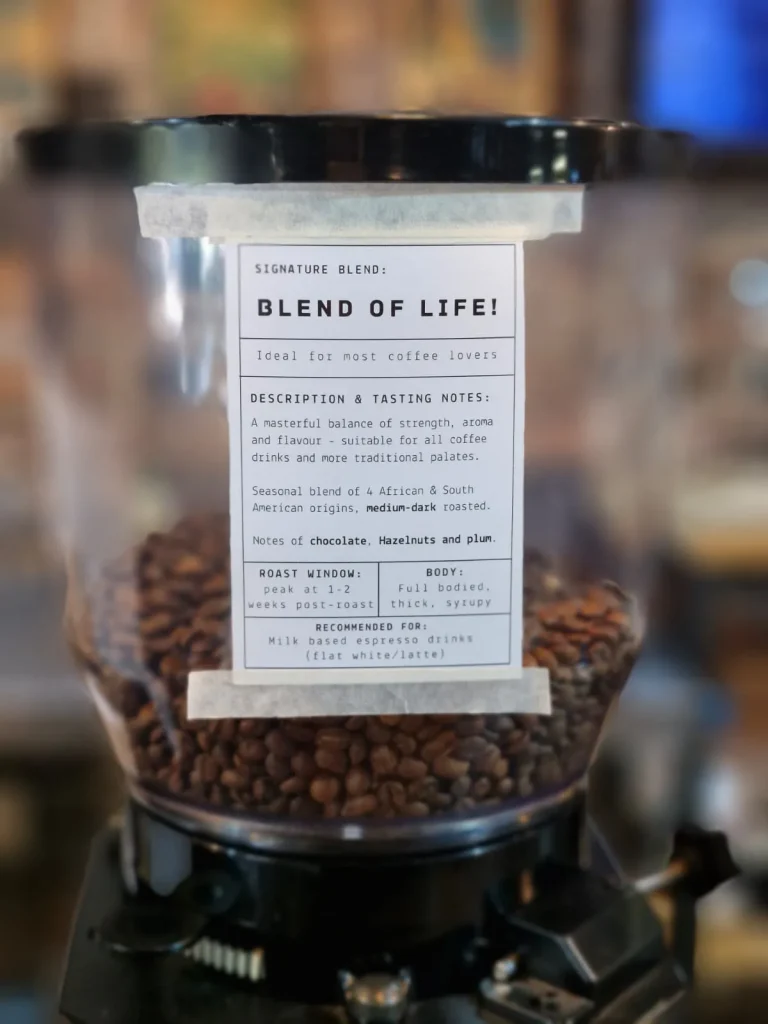
A guy at our cafe a while back picked up a bag of our Burundi, turned it over, read the tasting notes out loud, and then asked me completely straight: “So do you put that in?”. True story.
Honestly, fair question though. I thought roughly the same thing before I fell down this whole rabbit hole. You read a bag that promises peach and jasmine and a bit of dark chocolate, you take a sip, and it tastes like… coffee. So either the roaster is having you on, or there’s something wrong with your tongue.
There isn’t. Your tongue is fine. So let me explain what those little words on the back of the bag actually are, because coffee tasting notes aren’t marketing fluff, and nothing got added to your beans.
Nobody snuck anything in
Start here, because it’s the part that can be hard to believe once you’ve truly tasted an exotic light roast that is actually bursting with specific and identifiable flavour notes: there is nothing in that bag except roasted coffee. No syrups, no flavouring, no cheeky spritz of blueberry essence in the back of the roastery. If it says blueberry, it’s because the coffee actually tastes a bit like blueberry to a lot of the people who drink it. Or at least the roaster guy (me), and at least it might simply “remind” them of blueberry.
The thing we all forget is that a coffee cherry is a fruit. By the time it reaches you it’s a dark roasted bean (FYI: it’s technically a seed) that looks nothing like fruit, so the memory gets lost. But it started life as a red berry on a tree, packed with sugars and acids and a few hundred aromatic compounds, and a surprising number of those ride all the way through to your cup. Some are the same molecules you’d meet in an actual blueberry, or in jasmine, or in cocoa. Your nose recognises them and files them under a name it already knows. That’s all a tasting note is. Less “this contains blueberry,” and more “this reminded enough of us of blueberry that we wrote it down.”. Another example you will see often, is the more generic terms like “red/dark fruit” or “nuts”, without specifying the exact berry or type of nut. I tend to do that quite often personally, because frankly, its more honest. Sometimes my pallet is like “well that reminds me of red fruits but i cant say its like strawberries or even berries in general, it’s just got that dark fruit kind of taste to it”… Or something along those lines. That’s perfectly fine in my opinion, and I’m going to continue to do that.
So where does the flavour come from?
Roughly four things decide what ends up in your cup, and not one of them is an additive.
The variety of the plant. Same idea as apples: a Granny Smith and a Pink Lady are the same species behaving completely differently. Some heirloom Ethiopian varieties are famous for those floral, tea-like, berry flavours; others lean nutty and syrupy from the start.
Where it grew. Altitude, soil, climate, the whole terroir thing that wine people won’t stop talking about (and yes, I can hear myself). Higher, cooler farms tend to grow denser beans with brighter, more interesting flavours.
How it was processed. This one’s big, and I wrote a whole separate piece on it, but the short version: whether they strip the fruit off the bean straight away (washed) or let it dry on the bean like a raisin (natural) changes the cup a lot. A natural-process coffee is where a good chunk of that jammy, boozy, berry character comes from.
The roast. This part’s on us. Roast it lighter and those delicate fruit notes stay up front; take it darker and you trade them for deeper chocolate, caramel and toast (and eventually, if someone gets carried away, ashtray). Neither is wrong. It’s a dial, not a right answer.
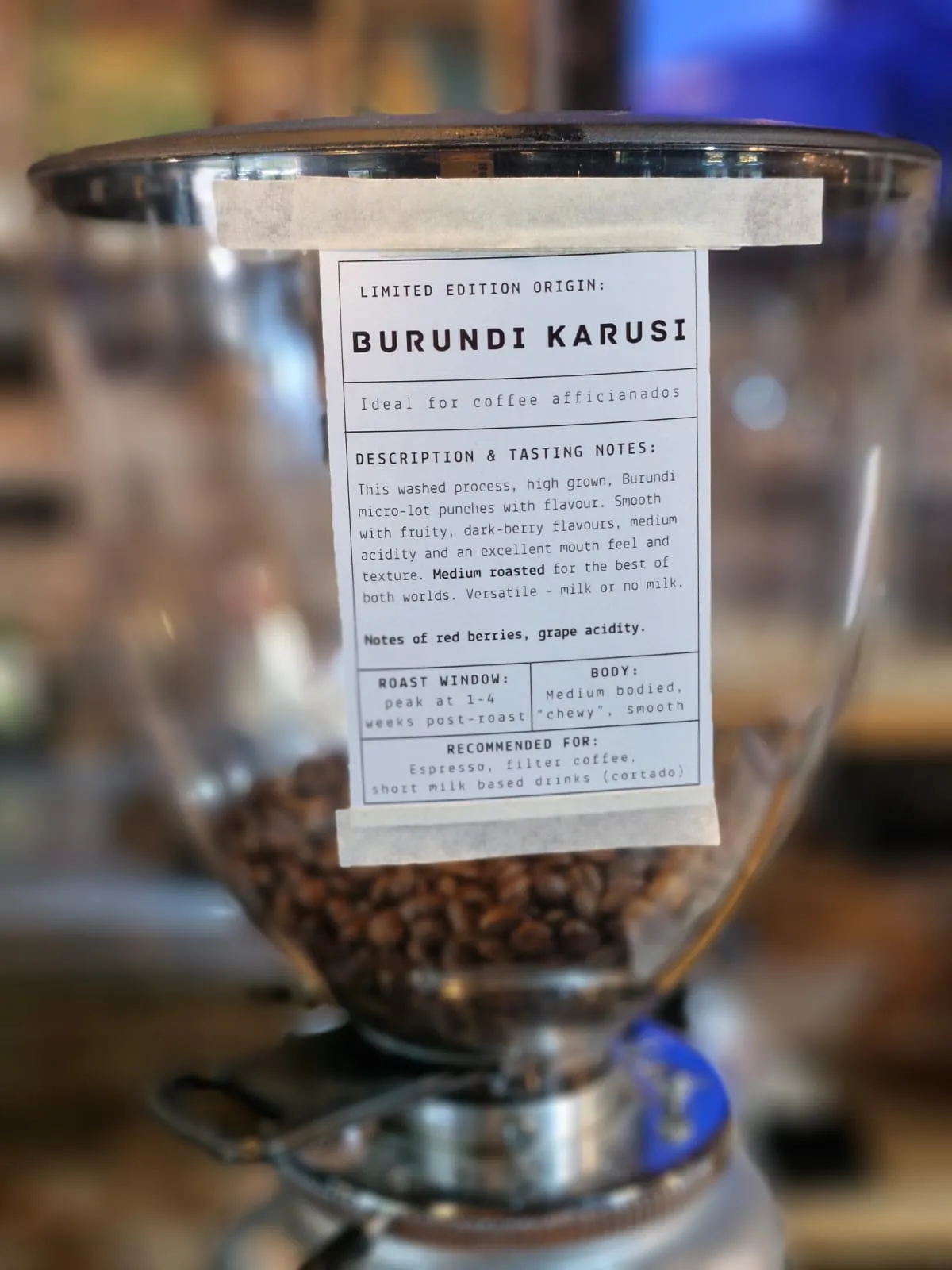
Stack all four up and you get why our Rwandan leans towards red apple while the Burundi tastes like someone squeezed a bit of citrus into it, when both are, technically, just coffee.
“Okay, but I still can’t taste it”
Right, the useful part. If you’ve never once picked out a note, you’re not broken and your palate isn’t too basic for the club. Tasting notes feel like a secret handshake because we’re describing smell with words, and almost nobody has ever practised putting words to smell. Most of us have been drinking coffee on autopilot on the way to something else for years. That’s normal. It’s also fixable.
The fix is almost ridiculously low-tech: slow down for one cup. Smell it properly before you sip, because most of what we call taste is actually happening up your nose. Let it cool a little too; hot coffee hides its own flavours, and a lot of the interesting stuff only shows up as the cup drops towards room temperature (the forgotten, lukewarm cup is often the most honest one). That’s probably my single biggest tip by the way: wait at least 10 minutes before you taste it after brewing, so as to not confuse yourself and get frustrated. And don’t grab for “blueberry” straight away. Start with “fruity or not fruity? sharp or round? burnt or smooth? more like chocolate or more tea like? does this remind me of anything at all?” The specific words come later, and they arrive faster than you’d think.
If you want the proper step-by-step, I wrote a whole guide to tasting coffee without feeling like an idiot, and if the washed-versus-natural thing snagged you, the processing piece unpacks it properly. Two other things that help more than people expect: buy coffee that’s actually fresh (stale beans taste flat and noteless), and if you want a vocabulary to borrow, the Coffee Taster’s Flavour Wheel is the industry’s shared map for exactly this. And if you’d rather watch someone walk you through actually tasting a cup, coffee obsessives like James Hoffmann have whole videos on it — I’m still working on my own palate, for what it’s worth.
None of this is meant to turn your morning coffee into homework. You’re allowed to just enjoy the cup and never think about jasmine once. But the notes aren’t a con, and the first time you catch one on your own, when you actually go “oh, there’s the peach,” it’s a small, good moment. Come find us at the trailer on a Sunday and I’ll pour you one of our single origins and deliberately not tell you what to look for. More fun that way. 🙂
Ready to taste the difference?
Fresh roasted by Apothecary in Blouberg, shipped to your door.
Browse our coffees →